Quick answer
A little cat drooling while purring, kneading or being stroked is usually a sign of a relaxed, content cat. Drooling that is new, heavy, bloody or smelly, or that comes with pawing at the mouth or not eating, can be a sign of dental disease, mouth ulcers, something stuck in the mouth, nausea or poisoning. Call your vet or a poison line right away if your cat may have chewed a toxic plant or licked a medicine.
Cat drooling ranges from perfectly normal to a sign of poisoning. The difference usually lies in when it happens, how much there is and what else your cat is doing. If you’re not sure how fast to act, our should I go to the vet check can help.
Is it normal for a cat to drool?
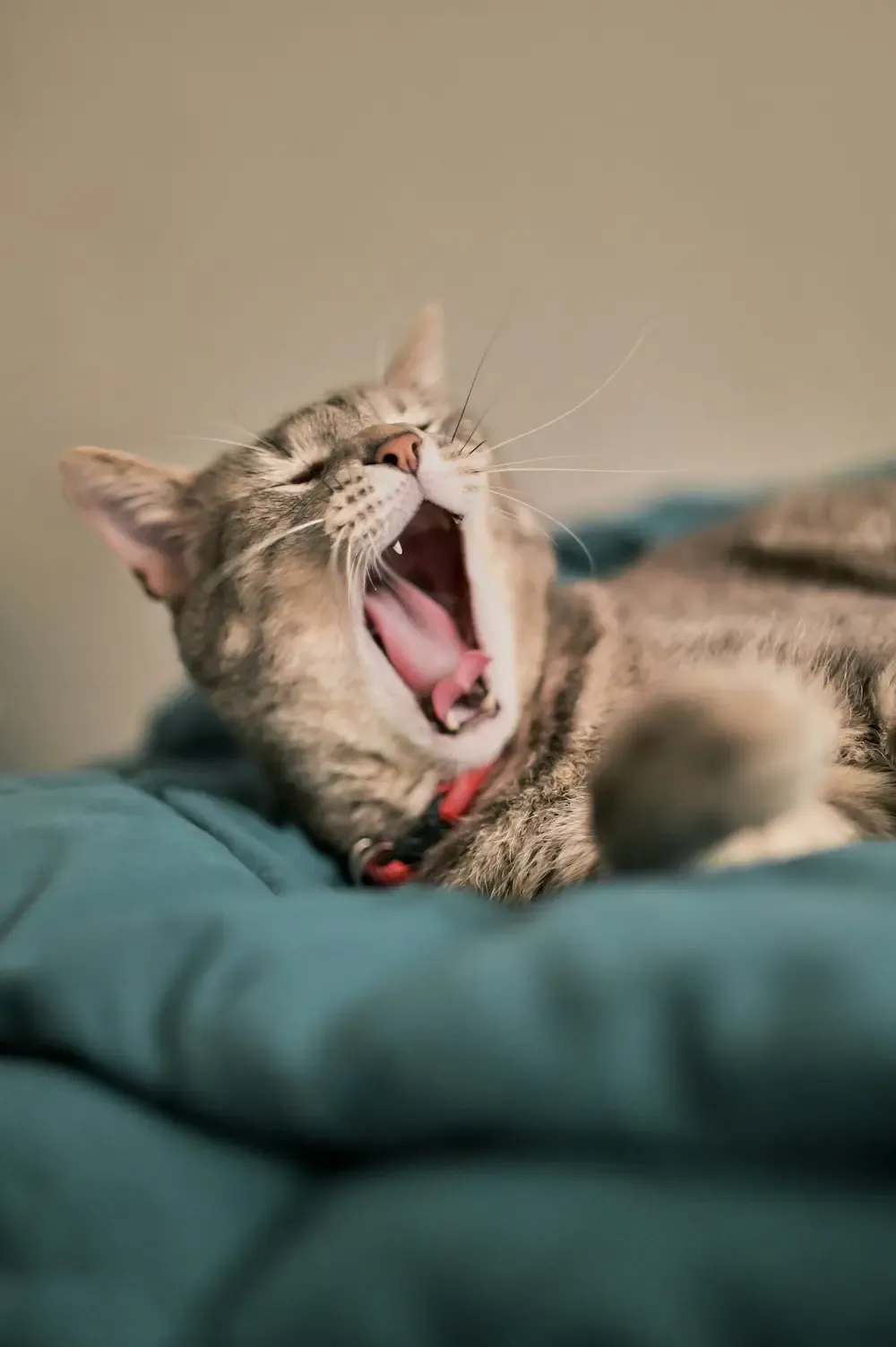
Sometimes. International Cat Care describes a cat that’s relaxed and open to interaction as one that may purr, dribble or knead on or near you. Merck Veterinary Manual also lists excitement among the causes of drooling.
Drooling when purring is usually harmless if:
- It only happens while your cat is being stroked, kneading or settling on your lap
- The drool is clear and thin, without blood or a bad smell
- Your cat eats, grooms and behaves normally
- It has always done this, rather than starting recently
Drooling that is new, heavy, one-sided, sticky, bloody or smelly is different. So is drooling at random times, or with pawing at the mouth, dropping food or a change in appetite. These signs mean a vet should look in your cat’s mouth.
What causes excessive drooling in cats?
Merck lists many causes of excessive drooling in cats, from mouth disease to poisons, nausea and fear. The most common ones for owners to consider are:
| Cause | Other signs | Urgency |
|---|---|---|
| Happy drooling | Only while purring, kneading or being stroked; otherwise well | Monitor |
| Stress or car travel | Drooling in the carrier or car, stops once calm | Monitor |
| Dental disease | Bad breath, pawing at the mouth, dropping food, chewing on one side | See vet soon |
| Mouth ulcers (calicivirus) | Sneezing, eye discharge, not eating, sores on tongue or gums | See vet soon |
| Bitter-tasting medicine | Sudden foamy drooling right after a pill, liquid or eye drop | Monitor |
| Nausea | Lip licking, swallowing, retching, then vomiting | See vet soon |
| String or object in the mouth | Pawing at the mouth, not eating, string visible under the tongue | Emergency |
| Poisoning (plants, chemicals, medicines) | Drooling that starts suddenly, vomiting, pawing at the face | Emergency |
| Heat stress | Panting, drooling, lethargy, vomiting, collapse | Emergency |
Can dental disease make a cat drool?
Yes. Mouth pain is one of the most common reasons for drooling in cats. Merck notes that bad breath and drooling are common when the mouth or tongue is inflamed, that saliva may be tinged with blood, and that pain may make a cat paw at its mouth.
The 2021 AAFP Feline Senior Care Guidelines explain that dental disease is often missed at home. Signs can include head shaking, pawing at the mouth, tongue movements and drooling, but many cats just show vague changes in activity, appetite or mood. The risk of gum disease and tooth resorption rises with age. See our guide to cat dental disease.
Merck also lists mouth tumors, such as squamous cell carcinoma, as a cause of bad breath, reluctance to eat and excessive drooling. Any lump, sore that won’t heal or swelling in an older cat’s mouth needs a prompt vet check.
Do mouth ulcers cause drooling?
They do, and often a lot. VCA explains that cats with feline calicivirus often develop mouth ulcers on the tongue, hard palate, gums, lips or nose, and drool heavily because the ulcers are so painful. Sneezing, eye and nose discharge, fever and a poor appetite usually come with it. Read more about cat upper respiratory infection.
Merck describes a more severe, long-lasting inflammation of the mouth and throat in some cats, often in cats that carry calicivirus long term. These cats may cry out or jump when they yawn or open the mouth for food. Merck also notes that an inflamed tongue can be linked to illnesses such as kidney disease or diabetes, and lists kidney failure among the metabolic causes of drooling.
A cat with mouth ulcers may be hungry but unable to eat. If your cat hasn’t eaten for 24 hours, read our guide to a cat not eating and call your vet.
What if something is stuck in my cat’s mouth?
Cats love to play with string, thread, yarn and tinsel. Merck notes that thread or string can get caught under the tongue, and that drooling and reluctance to eat are common signs. VCA explains that the base of the tongue is a common place for a string to anchor. The rest can trail down into the gut, which bunches up around it and can be sawn through.
Never pull a string out of your cat’s mouth. Merck warns that a string anchored in the mouth must never be pulled, because it may be embedded in the tissue and pulling can tear the intestine. Leave it in place and go to a vet or an emergency vet now.
The same goes for anything else wedged in the mouth, such as a bone splinter. Don’t try to pry it out yourself. Let your vet remove it.
Can nausea or poisoning make a cat drool?
Yes. Merck notes that vomiting in cats is normally preceded by excessive drooling, repeated swallowing and retching. A cat that drools, licks its lips and hides may be about to vomit. See our guide to cat vomiting for what to watch next.
Poisons are a more urgent cause. Merck lists drugs and poisons first among the causes of drooling in cats. Common examples:
- Toxic plants. The ASPCA lists pothos as toxic to cats. Its calcium oxalate crystals cause intense burning of the mouth, tongue and lips, excessive drooling, vomiting and trouble swallowing. Read is pothos toxic to cats.
- Human medicines and eye drops. Pet Poison Helpline warns that the decongestants in many nasal sprays and redness-relief eye drops can cause drooling, vomiting, a slow heart rate, collapse and death in pets, even in small amounts. See our guide to human medications toxic to cats.
- Chemicals and electrical cords. Merck notes that chemical or electrical burns in the mouth, for example from a kitten chewing a cord, make a cat drool and hesitate to eat or drink.
Don’t try to make your cat vomit or give home remedies. Call ASPCA Animal Poison Control or Pet Poison Helpline, using the numbers in the red box above, or go straight to a vet. Take the plant, packet or product with you.
Why does my cat drool after taking medicine?
Many medicines taste bitter to cats. Merck lists giving medicine as a cause of drooling, particularly in cats. VCA notes that eye drops can drain through the tear ducts into the mouth, and a bitter one can cause excessive, dramatic drooling. This is a response to the bad taste, not a drug reaction, and it stops within a short time.
If it keeps happening, ask your vet whether there’s another form of the medicine or an easier way to give it. Our guide on how to give a cat a pill has tips. Call your vet if drooling lasts longer than a short while, or comes with vomiting, weakness or breathing trouble.
Can heat make a cat drool?
It can. International Cat Care lists excessive panting, tiredness, drooling, a high temperature, vomiting and collapse as signs of heatstroke. Cats shut in a hot room, conservatory, car, shed or greenhouse are most at risk. If you think your cat has heatstroke, International Cat Care advises contacting your veterinary team immediately.
When should I take my drooling cat to the vet?
- Go now: any sign in the red box at the top.
- Call your vet today: heavy drooling that started suddenly, drooling with not eating, or drooling with sneezing and eye discharge.
- Book a visit: mild drooling that comes and goes, bad breath, or drooling on one side.
- Just keep an eye on it: clear drool only while purring and kneading, in a cat that’s otherwise well.
Your vet will examine the mouth carefully, looking at the teeth, gums, tongue and throat, and underneath the tongue. Merck notes that vets rule out rabies before a full mouth exam where it’s a possibility, so tell your vet if your cat is unvaccinated or has been bitten by a wild animal. Your cat may need sedation for a full look, dental x-rays or blood tests to check for kidney disease and infection. For other signs, browse our cat symptoms guides.
Frequently asked questions
Why does my cat drool when I pet it?
Some cats dribble a little when they're relaxed and enjoying attention, often while purring or kneading. If the drool is clear, only happens at those moments and your cat eats and acts normally, it's usually nothing to worry about.
My cat drooled a lot after taking a pill. Is that dangerous?
Cats often drool heavily when they taste a bitter medicine. VCA notes this is a reaction to the taste, not a drug reaction, and it stops quickly. Call your vet if it doesn't settle, or if your cat seems unwell.
Should I look in my cat's mouth if it's drooling?
A quick look in good light can help, but be gentle, because a sore mouth hurts and a cat may bite. If you see string or thread, don't pull it. Leave it and take your cat to a vet.
Can a cat drool from stress?
Yes. Merck Veterinary Manual lists fear, nervousness and motion sickness as causes of drooling. So some cats drool in the carrier or the car, and it usually settles once they calm down.
Sources
- Merck Veterinary Manual (Cat Owners): Disorders of the Mouth in Cats
- Merck Veterinary Manual: Salivary Disorders in Small Animals
- Merck Veterinary Manual: Gastrointestinal Obstruction in Small Animals
- Merck Veterinary Manual (Cat Owners): Vomiting in Cats
- VCA Animal Hospitals: Feline Calicivirus Infection
- VCA Animal Hospitals: Linear Foreign Body in Cats
- VCA Animal Hospitals: Corneal Ulcers in Cats (bitter eye medicine and drooling)
- 2021 AAFP Feline Senior Care Guidelines (JFMS)
- ASPCA Animal Poison Control: Golden Pothos
- Pet Poison Helpline: Imidazoline decongestants
- International Cat Care: Hazardous weather and your cat
- International Cat Care: Cat friendly interaction
Written by the CatsMed Team from the sources above. This guide isn’t reviewed by a veterinarian and isn’t a substitute for one. See how we research.