Quick answer
A cat hiding for a few days after a move, a new pet or a house full of visitors is usually dealing with stress, and most come out once they feel safe. Hiding that starts suddenly with no obvious trigger, or comes with not eating, vomiting, limping or litter box changes, can be a sign of pain or illness and needs a vet visit. Go now if your cat is hiding and breathing hard, straining to pee or too weak to get up.
Cat hiding is one of the most common things owners worry about, and most of the time there’s a simple reason. Cats hide to cope with stress. They also hide when they feel unwell. The trick is telling the two apart. If you’re not sure how quickly to act, our symptom check will tell you whether to go now, call today or book a visit this week.
Is it normal for a cat to hide?
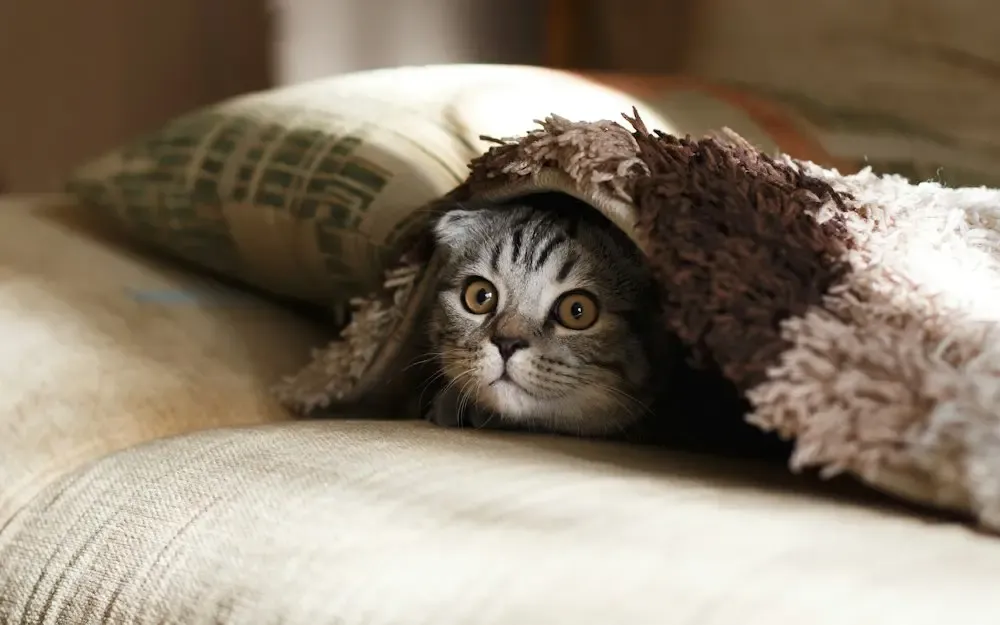
Yes. Hiding is normal cat behavior. Cats don’t have a group to protect them, so when something feels threatening, their instinct is to get out of sight and stay quiet. International Cat Care describes a hiding spot as a place where a cat feels less vulnerable and can escape danger.
A healthy cat may hide:
- In a new home. Many new cats spend their first days under a bed or sofa. Some only come out to eat and use the litter box at night.
- When visitors arrive. Strangers, children, loud voices and new smells send many cats to a quiet room until the house is calm again.
- After a change. A new pet, a new baby, building work, a house move, fireworks or a trip to the vet can all cause a few days of hiding.
- To rest. Some cats simply like to sleep somewhere enclosed, like a box or the back of a closet.
This kind of hiding has a clear trigger, and the cat still eats, drinks, grooms and uses the litter box. They come out when the house is quiet, and they slowly return to normal as the stress fades.
Why is my cat suddenly hiding?
A cat suddenly hiding with no obvious trigger deserves a closer look. Cats are experts at hiding illness. Cornell Feline Health Center notes that a cat can have a serious medical problem and show no clear sign of it until the condition is quite advanced. A change in behavior, like hiding, is sometimes the first clue.
Hiding can be a sign of pain. Cornell describes slowed-down, reclusive behavior as a sign of joint problems in cats of any age. In a 2016 survey of feline pain experts, signs such as reduced grooming, eating less and difficulty jumping were all agreed to indicate pain. You can check for those signs with our cat pain checker.
| Possible cause | Other signs to look for | Urgency |
|---|---|---|
| Stress or fear (move, visitors, new pet, loud noise) | Clear trigger, still eating and using the litter box | Monitor |
| Conflict with another cat | Hiding from one cat, blocked from food or litter box, hissing | See vet soon |
| Pain (arthritis, dental disease, injury) | Less jumping, less grooming, limping, grumpy when handled | See vet soon |
| Nausea or stomach upset | Eating less, vomiting | See vet soon |
| Fever or infection | Low energy, not eating, sneezing or a wound | See vet soon |
| Urinary blockage | Straining in the litter box, little or no urine, crying | Emergency |
| Breathing problem or serious illness | Fast or open-mouth breathing, weakness, collapse | Emergency |
This table can’t tell you what’s wrong with your cat. A vet needs to examine your cat to know the cause. What it can do is help you decide how quickly to call.
Dental pain and arthritis in cats are two common, easy-to-miss reasons an older cat withdraws. For dental problems, see our guide to cat dental disease.
When is cat hiding an emergency?
Hiding on its own is rarely an emergency. Hiding plus any sign in the red box at the top is. Go to a vet or an emergency clinic right away if your hiding cat is breathing hard, straining to pee, can’t stand, or may have been poisoned or hurt.
Book a vet visit within a day or two if:
- Your cat has been hiding for more than a day or two with no clear reason
- They’re eating less or have stopped eating (see cat not eating)
- They’re peeing or pooping outside the litter box (see cat peeing outside the litter box)
- They’ve stopped grooming, or their coat looks greasy or matted
- They’re sleeping far more than usual and seem flat (see lethargic cat)
- They hiss, swat or growl when touched, and that isn’t like them
An older cat hiding more is worth a check even if the change seems small. For a full list of reasons to call, see when to see a vet.
How do I tell a stressed cat from a sick cat?
Look at the whole cat, not just the hiding. International Cat Care lists hiding, resting more or pretending to sleep, becoming withdrawn or more clingy, and soiling indoors as signs of long-term stress. Some of those overlap with illness, which is why a vet check is the safest way to know.
A few questions help you sort it out:
- Is there a trigger? A move, a visitor or a new pet points to stress. Hiding out of nowhere points to a possible health problem.
- Is your cat still eating? A stressed cat usually eats, even if only at night. A cat that stops eating needs a vet.
- Does your cat come out when it’s quiet? A stressed cat relaxes once the trigger is gone. A sick cat often stays hidden even in a calm house.
- Is anything else different? Changes in drinking, grooming, walking, breathing or litter box use make illness more likely.
A cat can also be stressed and unwell at the same time, so one doesn’t rule out the other. International Cat Care advises contacting your veterinary team if you’re worried your cat could be suffering with stress, and Merck notes that vets rule out medical causes before treating a behavior problem.
How can I help a stressed cat that’s hiding?
If your vet has ruled out illness, or the hiding clearly started with a stressful change, you can help your cat feel safe again.
- Let them hide. Don’t pull your cat out. International Cat Care advises against coaxing a new cat out of hiding. Sit nearby, talk softly and let them come to you.
- Give them a safe room. Merck suggests a room of their own with a litter box, food, water, bedding and toys for cats that are scared of visitors or other animals.
- Offer good hiding places. A cardboard box on its side with a soft blanket, a covered bed or a high shelf all work. International Cat Care notes that restricted access to hiding places is itself a source of stress.
- Separate the resources. In a multi-cat home, International Cat Care recommends one of each key resource per cat plus one extra, in different places. That means litter boxes, food and water bowls, beds and scratching posts. Our litter box calculator can help.
- Keep a routine. Feed and play at the same times each day. Predictable days help an anxious cat relax.
- Let your cat start contact. Avoid staring, picking them up or forcing a cuddle. Offer a treat or a toy and let them decide.
- Try a pheromone diffuser. Synthetic feline pheromone diffusers may help some cats feel more secure while they settle in.
Be patient. International Cat Care notes that some cats take several weeks to feel safe in a new home. Never punish a scared cat, as Merck warns that punishment can make behavior problems worse.
If your cat is still hiding a lot after a few weeks, or the hiding is getting worse, talk to your vet. They can check for pain and illness and, if needed, refer you to a qualified cat behaviorist.
Frequently asked questions
How long is it normal for a cat to hide after moving house?
Many cats hide for the first few days in a new home, and shy cats can take several weeks to feel safe. As long as your cat is eating, drinking and using the litter box, give them time. If they stop eating or seem unwell, call your vet.
Should I pull my cat out from under the bed?
No. Forcing a scared cat out of a hiding place usually makes the fear worse and can get you scratched or bitten. Sit nearby, talk quietly and let your cat come to you. If you think your cat is sick, ask your vet how to get them safely into a carrier.
Why is my cat suddenly hiding when nothing has changed?
Cats are good at hiding illness, so sudden hiding with no clear trigger can be a sign of pain, nausea or another health problem. Watch for other changes in eating, drinking, grooming and litter box use, and book a vet visit if the hiding lasts more than a day or two.
Do calming pheromone diffusers help a hiding cat?
International Cat Care says synthetic feline pheromone diffusers may help some cats feel safer while they settle into a new home. They work best alongside safe hiding places, a quiet room and a calm routine, not as a replacement for a vet check if your cat seems unwell.
Sources
- International Cat Care: Stress in cats
- International Cat Care: Anxious cats
- International Cat Care: Helping your new cat or kitten settle in
- Merck Veterinary Manual: Behavior Problems in Cats
- Cornell Feline Health Center: The Special Needs of the Senior Cat
- Cornell Feline Health Center: Is Your Cat Slowing Down?
- Merola I, Mills DS. Behavioural Signs of Pain in Cats: An Expert Consensus. PLOS ONE, 2016
Written by the CatsMed Team from the sources above. This guide isn’t reviewed by a veterinarian and isn’t a substitute for one. See how we research.